
5,000 Days of a Political Prisoner ★ The Jeff Weinhaus Story: Inside Missouri's Shameful Secret
What began as a routine meeting at a public gas station to retrieve his seized broadcasting equipment ended in a 13-second ambush, leaving Weinhaus shot four times in the head and chest by a state trooper.
On July 11, independent Missouri journalist Jeffrey Weinhaus reaches a grim milestone: exactly 5,000 days of imprisonment for a weapon he never drew.
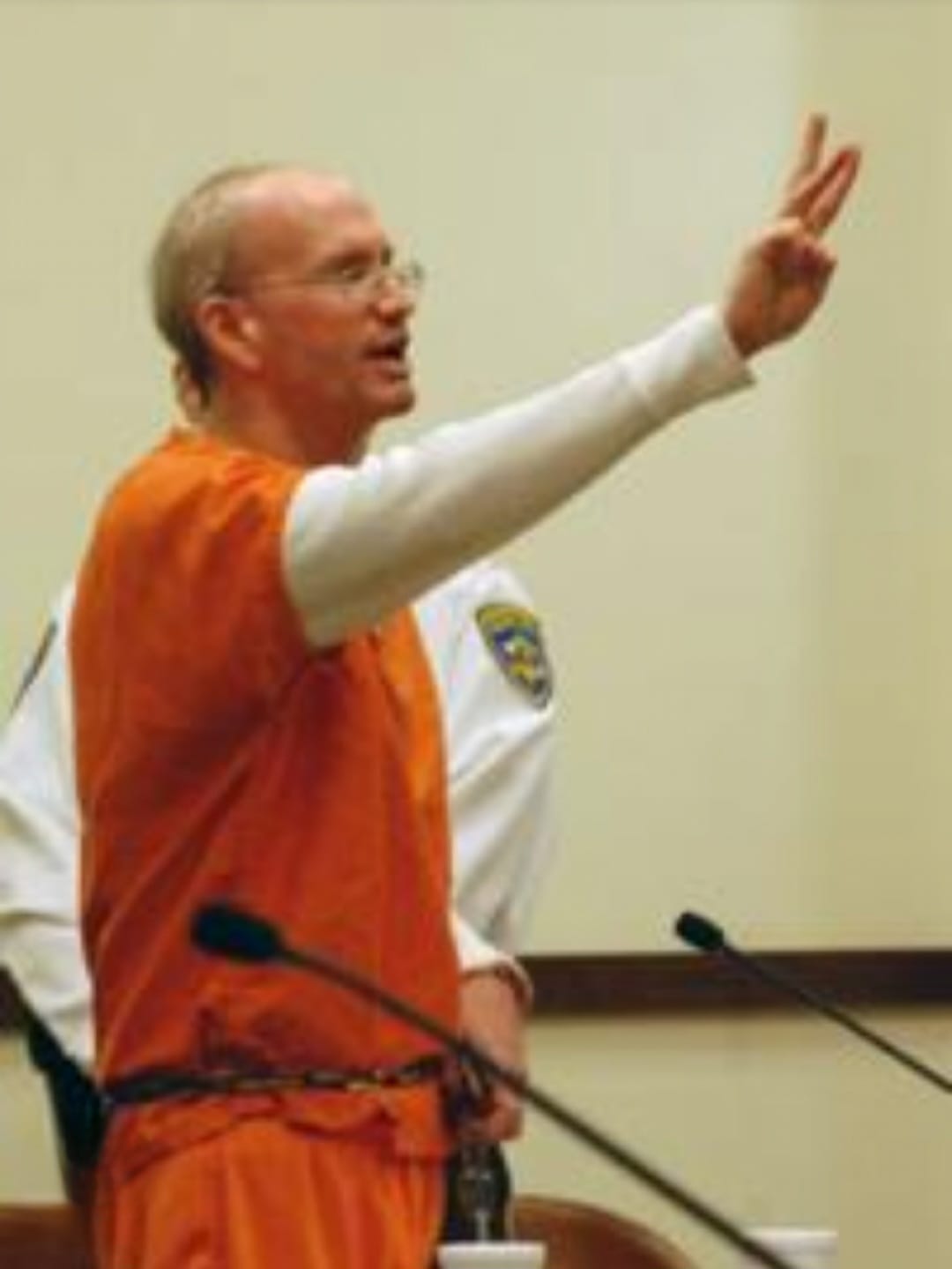
What began as a routine meeting at a public gas station to retrieve his seized broadcasting equipment ended in a 13-second ambush, leaving Weinhaus shot four times in the head and chest by a state trooper.
By tracing the straight line between his investigative reporting on local corruption and the extrajudicial tactics used to silence him, this expose dismantles the state’s official narrative frame by frame.
It reveals a chilling reality where institutional self-preservation completely overrides the truth, exposing the machinery of a legal system that has spent decades aggressively fighting claims of factual innocence.
The Missouri Attorney General’s Office maintains a seven-decade pattern of defending state convictions regardless of subsequent claims or evidence of factual innocence.
In twenty-seven separate exonerations since the turn of the century, the office has never formally admitted an error in any of the over 150,000 convictions it has defended.
This systemic policy, prioritizing procedural finality over factual correction, spans multiple administrations, including Democrats Eagleton, Webster, Nixon, and Koster, and Republicans Danforth, Hawley, Schmitt, Bailey, and Hanaway.
Former Missouri Supreme Court Justice Wolff observed that the office operates as though its structural mandate is to keep convictions intact, bypassing independent considerations of guilt or innocence.
● In July 2024, Sandra Hemme was released after serving forty-three years for a murder three separate courts determined she did not commit.
Attorney General Andrew Bailey continued to oppose her release, instructing prison officials to detain her until a circuit judge threatened a formal finding of judicial contempt.
● During the 2001 appellate proceedings for Joseph Amrine, the Attorney General's Office formally argued before the Missouri Supreme Court that procedural finality required execution even if a defendant possesses a valid claim of actual innocence.
● The office actively prolonged the imprisonments of Christopher Dunn and Kevin Strickland by appealing evidentiary overrules, maintaining opposition to their release even after the original local prosecuting entities acknowledged the wrong individuals had been convicted.
● The 2009 conviction of Donald Nash was overturned in 2020 after determination that the underlying DNA evidence was fabricated by an external investigator, a regional partner, and a Missouri State Highway Patrol laboratory technician, resulting later in a 34-million-dollar federal civil verdict against the state.
● Sergeant Folsom and Corporal Mertens initiated the Nash cold case investigation, which had gone unsolved by Mertens’s father, utilizing a special prosecutor assigned directly by the Attorney General's Office to secure the initial conviction.
● Weinhaus was actively documenting regional investigative filings, including the clearing of Crawford County Sheriff personnel by Sergeant Folsom, immediately prior to the September 11, 2012, shooting incident.
● Sergeant Folsom, a frequent witness for the state in numerous regional prosecutions, was under investigation by the Highway Patrol for standard-of-truth infractions and internal misconduct prior to the gas station shooting.
● Audio and video documentation demonstrates that Weinhaus did not attempt to draw his securely holstered firearm during the 13-second encounter at the St. Clair gas station.
● The Attorney General's Office has consistently defended the conviction and blocked evidentiary hearings for nearly fourteen years, leaving the underlying exculpatory audio and video unexamined in a formal post-conviction review.
An Expose on the Case of Jeffrey Weinhaus https://jeffreyweinhaus.wordpress.com
July 11 marks exactly 5,000 days that Missouri journalist Jeffrey Weinhaus has been imprisoned.
On September 11, 2012, Weinhaus traveled to a rural gas station in St. Clair, Missouri, for a scheduled meeting with the Missouri State Highway Patrol to reclaim his seized computers and production equipment.
Within 13 seconds of exiting his vehicle, Weinhaus was shot four times in the head and chest by Sergeant Henry James Folsom.
Although Weinhaus was holstered and never drew his weapon, he was convicted of assault on a law enforcement officer and received a 30-year prison sentence.
● The initial encounter occurred on August 22, 2012, when Sergeant Folsom and Corporal Scott Mertens questioned Weinhaus at his home regarding an online video challenging local government corruption.
● When Weinhaus refused to surrender his computer equipment without a subpoena, Sergeant Folsom claimed to smell marijuana to establish probable cause for a search warrant.
● Corporal Mertens testified that he did not smell marijuana, and defense counsel failed to call an expert witness to challenge the physical possibility of detecting the substance from that distance.
● Sergeant Folsom served the search warrant alone, failing to notify or include the local sheriff, a direct violation of Missouri Revised Statute section 43.200.3, which mandates sheriff participation.
● The subsequent seizure of Weinhaus's computers and recording equipment bypassed the requirements of the Privacy Protection Act of 1980, which protects journalistic work product from standard search warrants.
● The September 11 meeting at the public gas station was a coordinated ruse to arrest Weinhaus on misdemeanor drug charges and a charge of tampering with a judicial official.
● Law enforcement officials, including present FBI agents, failed to wear bulletproof vests or secure the public area, indicating they did not assess Weinhaus as an active threat prior to the shooting.
● Audio from a recording device worn by Weinhaus documents that Sergeant Folsom opened fire immediately after questioning the presence of Weinhaus's holstered firearm.
● Sergeant Folsom testified that Weinhaus drew his weapon, but physical evidence and video documentation indicate the firearm remained in the holster throughout the incident.
● The defense counsel failed to introduce critical video evidence and local deputy testimony during the trial, leading to a conviction without a complete presentation of the facts.
Legal Analysis of Statutes in the Weinhaus Case
Missouri Revised Statute Section 43.200.3
This statute governs the search and seizure powers of the Missouri State Highway Patrol.
It explicitly mandates that patrol officers cannot secure or execute search warrants in criminal cases without first operating in conjunction with the local sheriff or getting specific authorization.
In the Weinhaus case, Sergeant Folsom obtained and executed the initial search warrant at the Weinhaus residence without notifying or involving the local county sheriff.
This failure to cooperate with local county law enforcement constitutes a direct breach of statutory authority, rendering the execution of the warrant extrajudicial.
Privacy Protection Act of 1980 (42 U.S.C. Section 2000aa)
This federal statute prohibits law enforcement officials from searching for or seizing work product materials or documentary materials possessed by a person reasonably believed to have a purpose to disseminate to the public a newspaper, book, broadcast, or other similar form of public communication.
The law requires government officials to utilize a subpoena duces tecum rather than a search warrant, allowing the journalist to challenge the request in court before materials are surrendered.
As an independent journalist operating a public video channel and publication, Weinhaus's computer towers, video cameras, and digital storage media fell directly under this protection.
The use of a standard search warrant to seize his production tools violated federal protections established to prevent the summary shutdown of press operations.
● Section 43.200.3 serves as a statutory check on state-level police power, ensuring local accountability through the elected sheriff.
● The seizure of digital media without a subpoena explicitly bypassed federal safeguards designed to protect journalistic work product from immediate state seizure.
● The failure of defense counsel to litigate these specific statutory violations during the trial phase prevented the suppression of evidence obtained through the unauthorized search warrant.
Evidentiary Failures of the Defense Counsel
The primary defense failure centered on the mismanagement of the audio recording captured by the spycam watch Jeff wearing, alongside the video evidence from the gas station dashcam.
The video file contains the exact timeline of the 13-second encounter.
The recording captures Sergeant Folsom shouting an order regarding the gun, immediately followed by the sound of four gunshots.
The defense failed to utilize audio forensics to establish the exact millisecond timeline between Folsom's spoken command and the firing of his weapon, which would have legally disproved the claim that Weinhaus had sufficient time to react, draw, and aim a weapon.
The video shows the physical positioning of the officers and Weinhaus.
The video confirms that Weinhaus's hands did not make the specific physical movements required to unclip, draw, and level a firearm from his holster within that sub-second window.
By failing to freeze-frame and present this visual timeline frame-by-frame to the jury, the defense allowed the state’s narrative of an attempted assault to stand unchallenged.
● The defense failed to retain an independent audio-forensic expert to isolate the background noise, the commands, and the shots to prove the immediacy of the firing.
● The defense failed to introduce testimony from local deputies who arrived post-incident and observed that the firearm was secured inside the holster rather than loose on the ground.
● The trial counsel did not cross-examine Corporal Mertens using the precise time-stamps of the video to expose contradictions regarding his distance and line of sight during the shooting.
● The defense allowed the prosecution to present a subjective interpretation of the dashcam video without entering the physical holster into evidence to demonstrate its retention mechanisms.
The Tactical Set-Up and Physical Constraints of the Shooting
The meeting at the remote gas station in St. Clair was organized by the Missouri State Highway Patrol under the pretext of returning Weinhaus’s seized computer equipment.
This location was specifically selected by law enforcement rather than a standard police station or neutral public building.
At the time of the incident, a construction crew was working directly across the road, providing an immediate line of sight to the gas station parking lot.
The physical arrangement of Weinhaus's holstered pistol further contradicts the state's narrative of an attempted assault.
Because the seat belt buckle inside his vehicle pinched against his waist when his firearm was positioned on his dominant right side, Weinhaus had altered his setup.
To drive comfortably without the seat belt mechanism jamming into the holster, he shifted the pistol over to his left side.
For a right-handed individual, positioning a firearm on the left side places it in a non-drawing, cross-draw orientation that requires deliberate, multi-second physical maneuvering to deploy—making a rapid draw physically impossible within the 13-second window of the encounter.
● The choice of the remote gas station created an isolated perimeter where officers could deploy without standard precinct oversight or public interference.
● Members of the nearby construction crew witnessed the rapid escalation, observing that Weinhaus was fired upon almost immediately after exiting his vehicle.
● The left-side placement of the holster meant the firearm was positioned for driving comfort, not tactical readiness or an offensive draw.
● The defense failed to introduce the vehicle's interior dimensions and seat belt configuration into evidence to demonstrate why the firearm had been moved to the left side.
● No expert testimony was presented regarding cross-draw mechanics to show the jury that Weinhaus could not have leveled a weapon at the officers from that physical posture.
The Chain of Command and Structural Conflicts
The escalation that culminated in the September 11, 2012, shooting began directly with intervention from the local judiciary.
On August 18, 2012, Missouri Circuit Court Judge Kelly Parker initiated direct communication with the Missouri State Highway Patrol by placing a phone call to Sergeant Folsom regarding an online video Weinhaus had posted criticizing judicial corruption.
Following this judicial contact, communications traveled up the command chain as Sergeant Folsom met with his supervisors and local officials to coordinate an operational response.
Rather than maintaining a standard separation between the complaining judicial officer, the investigating police force, and the prosecuting authority, the line between these entities was heavily blurred throughout the state's intervention.
● The initial investigation was triggered not by standard law enforcement surveillance, but by a direct, personal phone call from Circuit Court Judge Kelly Parker to Sergeant Folsom.
● Orders and operational planning were routed up the line through Highway Patrol supervisors, who greenlit the strategic decision to execute an arrest warrant at a public location rather than utilizing standard precinct channels.
● The defense failed to challenge the institutional conflict of interest presented by a sitting judge acting as both the catalyst for a criminal investigation and an officer of the court structure handling the broader case framework.
● The close proximity and personal relationships within the local jurisdiction—including systemic ties between investigating officers and personnel within the prosecuting office—undermined the objectivity required for an impartial investigation and subsequent trial.
— Five thousand days in a concrete cell is a bitter price to pay for a gun that never left its leather.
But in Missouri, the machinery of the state doesn't look back, and it sure doesn't apologize.
For Jeffrey Weinhaus, that thirteen-second ambush wasn't just a setup at a public pump—it was an inevitable explosion of panic from a state trooper medicated on psychotropic drugs, fighting severe, un-disclosed PTSD, and primed to see a mortal threat from any simply reaching for a phone.
By burying the shooter's unstable mental condition and hiding the forensic tapes from a real courtroom, the state chose to protect a broken badge rather than look at the truth, leaving Jeffrey Weinhaus locked away under a stitched-up lie while Missouri's shameful secret stays hidden behind prison walls.
— Vincent Easley II https://reallibertymedia.com/author/https-reallibertymedia-com-author-vine