
A Refusal to Yield ★ LaVoy’s Stand for Constitutional Rights on Highway 395
An analysis and interpretation of the events surrounding the January 26, 2016 traffic stop on Highway 395 involving the death of LaVoy Finicum
The Events at the First Traffic Stop on Highway 395
During the initial stop, law enforcement officers intercepted the vehicle carrying LaVoy Finicum, Ryan Bundy, Shawna Cox, Ryan Payne, and Victoria Sharp as they traveled toward Grant County to attend a public meeting with Sheriff Glenn Palmer.
During the initial traffic stop, officers immediately targeted LaVoy with laser sights—a point Shawna later highlighted in a public presentation.
Cellphone video recorded by Shawna inside the vehicle captured the exchange between LaVoy and officers at the scene.
Law enforcement opened fire without delay, striking the side mirror on Ryan Payne’s side of the vehicle.
Despite the immediate escalation, LaVoy did not panic, lose control, or freak out.
Recognizing their intent, he remained calm and plainly stated that if they intended to kill him, they would have to do it right there, refusing to step out of the vehicle:
"You want to shoot me, shoot me! Put the bullet through me... I'm going to go meet the sheriff in Grant County."
LaVoy was explicit that officers could follow them to the meeting and discuss matters there.
Reinterpreting the Statement: Rights Assertion vs. Suicidal Intent
Commentators and official reports often frame statements made during high-tension standoffs as evidence of a "suicide-by-cop" mindset or an explicit provocation.
However, when viewed through the lens of constitutional rights advocacy and the specific context of the journey, a different interpretation emerges:
Intent to Reach Lawful Authority: LaVoy explicitly informed officers that his destination was a meeting with an elected county sheriff.
The assertion that he was en route to consult with local authorities undermines the claim that he sought a violent end or an indiscriminate confrontation.
Assertion of Fundamental Rights: Rather than expressing a desire to die, statements refusing unlawful detention serve as an absolute refusal to yield basic constitutional liberties—specifically the fundamental right to travel without warrant or restraint.
Refusal of Compliance under Duress: The standard argument that compliance guarantees safety overlooks the principle that submitting to an unconstitutional exercise of authority surrenders the right itself.
Demanding that officers act at their own peril if they intend to deprive a citizen of liberty highlights the fundamental tension between state power and individual rights.
Deprivation of Rights Under Color of Law: From this perspective, the interception of a citizen traveling to meet an elected local official, absent an active warrant at the moment of initial stop, represents a direct deprivation of constitutional rights under color of authority.
The statement made by LaVoy Finicum at the first traffic stop was not an expression of suicidal intent, but a resolute refusal to submit to an unconstitutional deprivation of his rights.
En route to meet with an elected local authority, he asserted his fundamental right to travel freely, choosing to stand firmly on constitutional principles rather than comply with an overreaching state authority acting without a warrant.
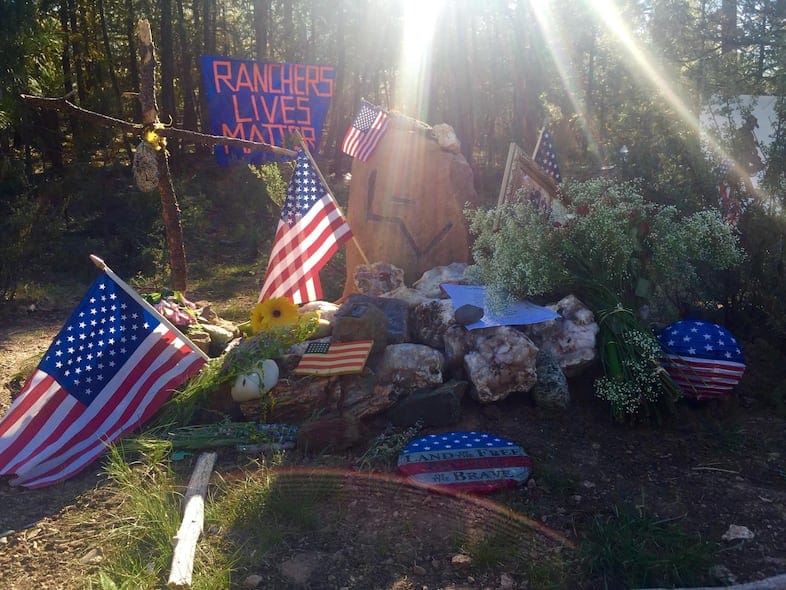
Image: Ironically, the photo in this article from OPB is titled, LaVoy Finicum Supporters Stand Guard At Illegal Roadside Memorial
https://www.opb.org/news/series/burns-oregon-standoff-bundy-militia-news-updates/oregon-us-route-395-lavoy-finicum-memorial-supporters-guard
— Vincent Easley II https://reallibertymedia.com/author/https-reallibertymedia-com-author-vine