Evidence & Arguments Regarding the Planted Weapon Theory
Analysis of the LaVoy Shooting
On January 26, 2016, Robert "LaVoy" Finicum was shot and killed by Oregon State Police during a highway blockade in a deadman's stop of a blind corner.
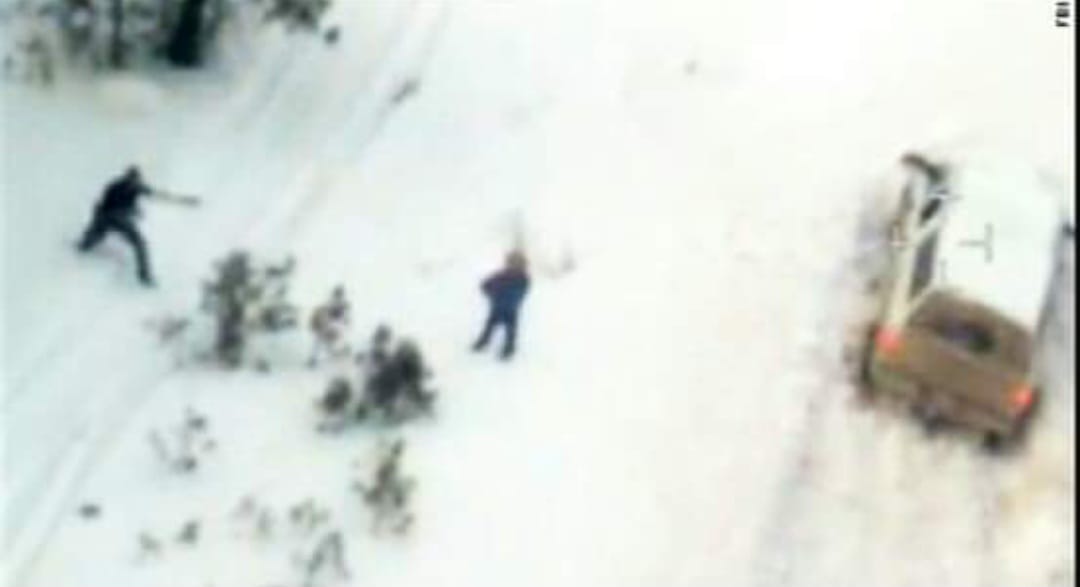
Official reports concluded the shooting was justified self-defense, triggered when LaVoy reached toward his chest. But a closer look at the physical evidence, the conduct of law enforcement at the scene, and the video record reveals a case built on far shakier ground than officials have admitted — and raises serious, unresolved questions about whether the weapon attributed to LaVoy was ever drawn, or even carried, the way investigators claim.
The Gun Doesn't Fit the Story
LaVoy carried a six-shooter revolver in a hip holster. He wasn't wearing it that day. "Instead, investigators say they found a 9mm Ruger SR9, the pistol matching the underarm holster he wore that shoved barrel-first into an inner jacket pocket, grip pointed backward.
Ask any experienced gun owner what that means: a backward grip in a loose pocket isn't a holstered weapon ready for a "draw." It's a mechanically awkward, near-impossible position to draw from under stress, and one far more likely to slide out on its own during a fall or a struggle than to be pulled with intent.
And there's video that should settle the question, but instead deepens it. Shawna Cox's footage from inside the truck cab shows LaVoy exiting the vehicle with no bulge, no outline, no telltale sway of weight on his left side where the gun supposedly sat. If a loaded 9mm was really riding in that pocket, the camera should have caught some trace of it. It didn't.
A Scene Compromised Before Investigators Ever Arrived
The official account also depends on trusting law enforcement's handling of the scene, trust that the evidence doesn't support. FBI Special Agent W. Joseph Astarita fired two shots that never appeared in the initial official record. Those rounds simply vanished from the government's own narrative until later investigation forced them into the open.
Meanwhile, aerial surveillance footage shows agents and troopers walking freely through the scene, clustering around LaVoy's body, and collecting shell casings, all before homicide investigators, whose job is to preserve exactly that kind of evidence, ever set foot on site.
Astarita was ultimately acquitted at trial, but acquittal on criminal charges is not the same as vindication of the scene's integrity. The chain of custody was already broken by the time anyone tasked with protecting it arrived.
A Movement, Not a Threat
What remains is the government's central claim: that LaVoy's hand moving to the outside of his jacket represented a lethal threat justifying deadly force. But strip away the interpretation and look at what's actually documented. His hands never went inside the jacket. No weapon was ever seen in his hand. No weapon was ever visibly drawn. The entire justification for the shooting rests on inference about intent, not on anything captured on camera.
A man who has just plowed into the snow at a blockade, been shot at, and is stumbling in deep snow has every reason to move his hands to his chest that has nothing to do with reaching for a gun. Instead we might expect any number of reactions including, disorientation or an instinctive reaction to being struck from non-lethal rounds. Officials chose the most damning interpretation of an ambiguous gesture, then built a use-of-force justification around it.
The Pattern Is the Point
Taken individually, each irregularity might be explained away. Taken together, they form a pattern that official narratives have never adequately addressed: a weapon positioned in a way no one would rationally draw from, video that shows no evidence it was even there, federal agents who initially concealed their own gunfire, a crime scene walked over and picked clean before real investigators arrived, and a fatal decision made on the basis of a gesture, not a drawn weapon, not a visible threat, not a shot fired.
The official story asks the public to trust that every one of these facts is coincidental. The evidence suggests otherwise.
— Vincent Easley II https://reallibertymedia.com/author/https-reallibertymedia-com-author-vine