HELLO, My Name Is Domestic Terrorist
Free Speech Under Scrutiny: What a Leaked FBI Guide Means for Defenders of Liberty ☆ Protected Commentary or Government Target?
As an independent writer focusing on constitutional principles and government oversight, my work centers on publishing commentary that challenges official narratives.
When covering controversial events, every independent commentator must evaluate the legal boundaries of their work and understand where political advocacy ends and government scrutiny begins.
For over a decade, I have written in defense of those involved in the Bundy Ranch fed-led standoff and the Malheur Wildlife Refuge occupation.
Naturally, this raises the question of whether publishing political commentary on these events puts an author at risk of retaliation, federal suspicion, or legal exposure.
Under the Constitution, peaceable commentary and political defense remain protected under the First Amendment. To understand how federal law enforcement views these issues, it is instructive to examine leaked internal FBI documents released by Project Veritas.
The FBI Counterterrorism Division’s "Domestic Terrorism Symbols Guide" on Militia Violent Extremism (MVE) includes a historical timeline that marks the April 2014 Bunkerville standoff and the 2016 Malheur occupation as key foundational points.
While federal agencies frame these standoffs as critical markers in their MVE history, the guide's own legal disclaimer notes that referencing historical events, symbols, or quotes does not inherently constitute evidence of unlawful activity.
Crucially, federal law enforcement is explicitly prohibited from conducting investigative activity based solely on First Amendment-protected speech.
The Leaked FBI Document Exposed
The leaked internal guide, titled "Domestic Terrorism Symbols Guide:
Militia Violent Extremism," details how federal law enforcement tracks political symbols, traditional rhetoric, and historical timelines across the country.
Legal Boundaries and Constitutional Guarantees
The document itself explicitly clarifies that displaying these flags, quotes, or historical symbols does not establish proof of violent extremism or criminal behavior.
A substantial portion of citizens utilize these symbols strictly out of respect for their historical, peaceful, or constitutional significance.
Furthermore, federal law explicitly bars agencies like the FBI from launching investigations based solely on conduct protected under the First Amendment.
Tracked Symbols and Historical Imagery
The guide outlines a wide variety of symbols tied to militia networks, ranging from Second Amendment markers and Punisher skulls to Boogaloo imagery, Anarcho-Capitalism flags, and electrical resistance symbols.
Alongside those modern icons, the document flags foundational American imagery, including the Gadsden Flag, the Liberty Tree, Revolutionary War militiamen, and the Betsy Ross Flag.
Rhetoric, Cited Figures, and the Historical Timeline
The document lists well-known American quotes, including historic expressions such as "When tyranny becomes law, rebellion becomes duty" and statements regarding the tree of liberty.
It also identifies several figures viewed as martyrs within these networks, specifically naming Vicki Weaver, LaVoy Finicum, Duncan Lemp, and Ashli Babbitt.
Finally, the FBI's historical timeline pinpoints modern militia activity back to major standoff events, explicitly placing the April 2014 Bunkerville standoff in Nevada and the January 2016 Malheur Wildlife Refuge occupation in Oregon at the head of its timeline.
Online Publishing and Media Scrutiny
Beyond physical flags and symbols, the leaked document and subsequent whistleblower disclosures reveal that federal surveillance actively monitors online activity, digital publications, and social media commentary.
The guide notes that MVE networks often operate through nationwide, mostly online channels to disseminate analysis and political commentary.
While the FBI's official guidance maintains that publishing articles or sharing historical commentary cannot legally serve as the sole basis for a federal investigation, the reality remains that independent media and online commentary are the primary arenas where this rhetoric is tracked and indexed.
A Cautionary Note to Readers and Commenters To those engaging in the discussion, remember to guard your actions in life and, most especially, guard your words.
Throughout recent history, we have seen how social media posts and online comments are gathered, taken out of context, and used as ammunition against individuals.
Do not give anyone the pretext or leverage to hold your words against you. Keep your commentary strictly focused on lawful political discourse, stay grounded in constitutional rights, and always guard your words.
Vincent Easley II https://reallibertymedia.com/author/https-reallibertymedia-com-author-vine
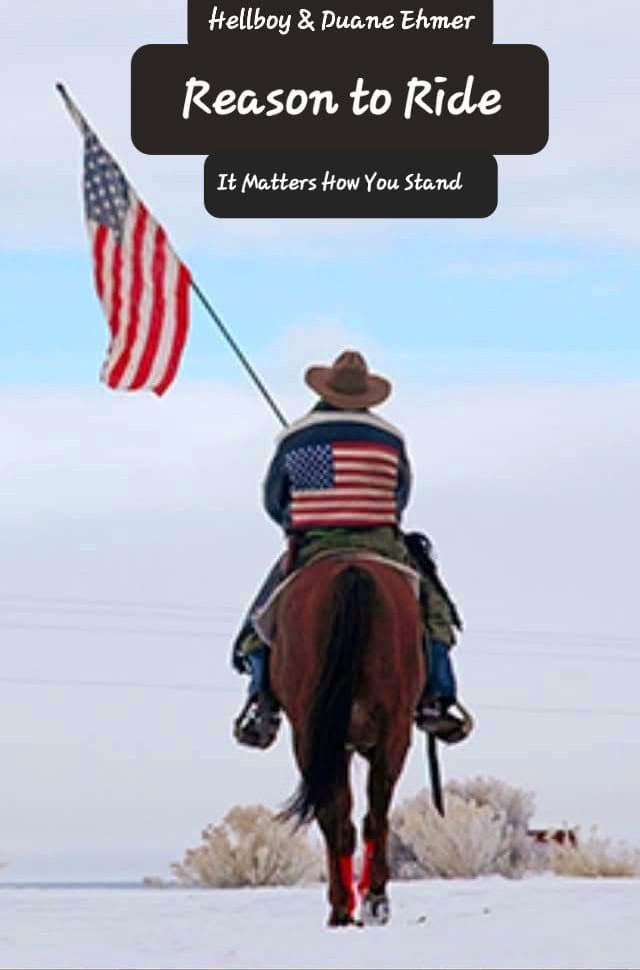
Top Image: Hellboy & Duane Ehmer — Reason to Ride — It Matters How You Stand
Below Image: Real Liberty Media Icon Credit, Donna VanMeter
X