
Securing the Frontier ★ The Legal Roots of Western Land Rights and Federal Control
To understand the modern conflicts over western lands, we must look past contemporary media narratives and examine the documented legal history of the West.
We can trace these roots back to the pioneer era to show how settlers secured permanent, deeded property, grazing, and water rights long before federal agencies intervened.
Understanding this foundation is essential to clarifying the true history of land sovereignty and why these struggles continue today.
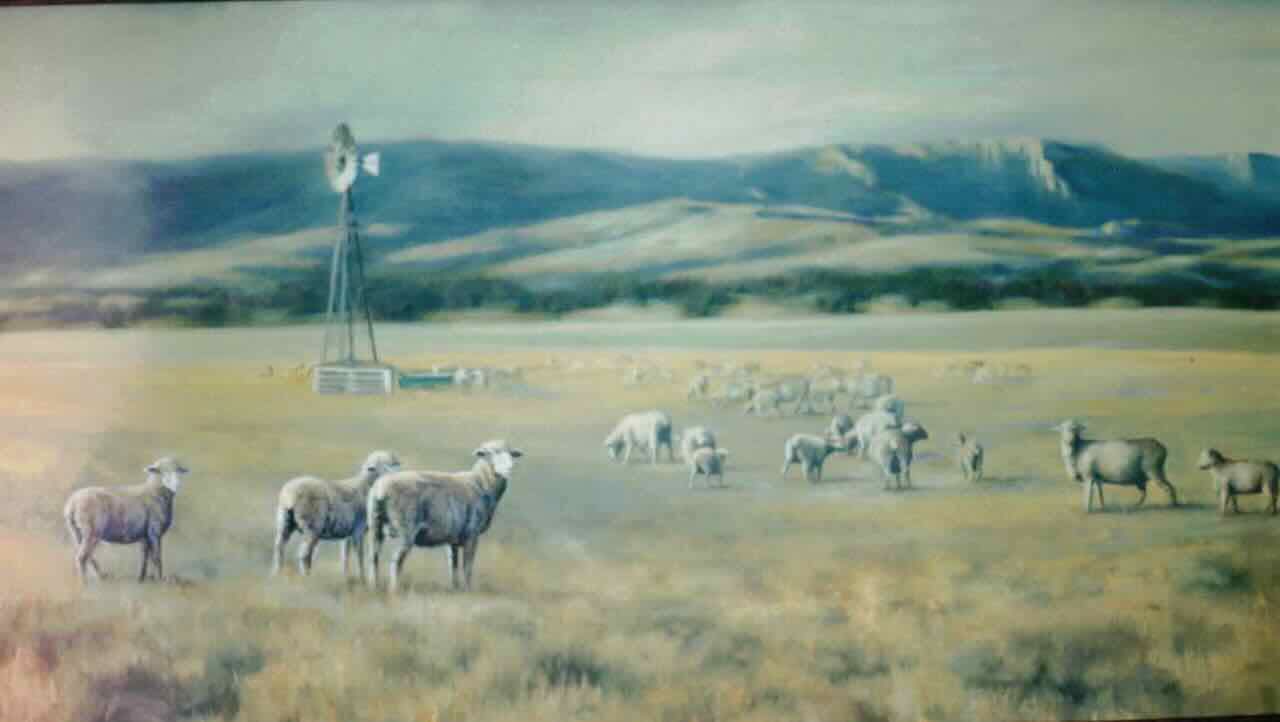
Prior to the Taylor Grazing Act of 1934, western lands were free from centralized federal regulation, governed instead by established custom, local laws, and court rulings.
Under the Supreme Court’s 1890 Buford v. Houtz decision, an "implied license" recognized a century of custom, allowing people to freely graze livestock on open, unenclosed lands without being considered trespassers.
Western states reinforced this open range through "fence-out" laws, which placed the burden on landowners to fence animals out rather than holding livestock owners liable for trespass.
Control over these ranges was ultimately secured through water rights under the doctrine of prior appropriation, where pioneers who established first use of vital water sources naturally determined who could run livestock on the surrounding lands.
Historically, the "disposal" of lands referred to the legal transfer of land ownership from the federal government into private hands. This was accomplished by issuing a land patent, which served as the official deed and title guaranteeing private ownership.
Disposal was the primary mechanism used to encourage westward expansion, ensuring that those who went west to build lives could secure permanent, recognized legal rights to their property.
These transfers were executed through several distinct pathways of settlement. Under the homestead acts, settlers earned title by living on and cultivating the land for a set period.
Under the principle of preemption, or "first use" and prior appropriation, pioneers who had already settled and improved land were granted the first rights to it.
Through these methods, the pioneer movement established recognized deeds and titles, converting vast tracts of the frontier into private, deeded properties, including grazing and water rights.
The Taylor Grazing Act, signed into law on June 28, 1934, ended unregulated open-range grazing on western lands by establishing managed grazing districts.
To administer these new regulations, the federal government created the U.S. Grazing Service in 1934. On July 16, 1946, the Grazing Service was merged with the General Land Office, which had overseen the surveying and disposal of lands since 1812.
Between 1934 and 1946, the newly formed agency underwent significant structural changes. It was initially established within the Department of the Interior as the Division of Grazing, led by Colorado rancher Farrington Carpenter.
Under his leadership, the division worked directly with local advisory boards made up of cattlemen and sheepmen to draw grazing district boundaries and determine how rangelands were shared. In 1939, following Carpenter's departure, the division was officially renamed the U.S. Grazing Service.
During this period, grazing fees were established under a structure meant to reinvest directly back into the land.
The primary portion of these collected fees was earmarked by law to fund range improvements—such as water developments, fencing, and conservation projects—to sustain the productivity of the rangeland.
Only a minor, secondary amount of the collected fees was intended to cover the actual administrative costs of running the agency itself. During this twelve-year window, the agency struggled with severe underfunding and political battles over fee rates, which ultimately led to the 1946 consolidation with the General Land Office.
This merger created the Bureau of Land Management, consolidating land administration and grazing management into a single agency.
Following the 1946 merger, the newly formed Bureau of Land Management began shifting away from its original purpose as a disposal agent tasked with transferring lands into private ownership.
This shift was finalized with the passage of the Federal Land Policy and Management Act (FLPMA) of 1976, which formally ended the homesteading era and declared a permanent federal policy of retaining western lands under federal control.
Crucially, while FLPMA established this permanent retention, it also included explicit language declaring that the new policy was subject to all "valid existing rights" already established on the land.
With this legislative mandate, the BLM transitioned from a passive administrative body into a regulatory management agency.
Over the subsequent decades, the agency asserted direct ownership and control over these lands. By enforcing increasingly restrictive regulations, raising administrative hurdles, and reducing grazing allocations, critics and local ranchers argue the agency systematically sought to manage traditional ranching operations out of business.
This long historical evolution ultimately culminated in the high-profile standoff at the Bundy Ranch, where Cliven Bundy drew a hard line by asserting his ancestral grazing and water rights against federal authority.
Standing firmly on a family heritage rooted in the region since 1877, his family had established their rights long before the creation of the modern regulatory bureaucracy.
Standing firmly on the legal traditions of first use, prior appropriation, historical land patents, and the process of land disposal during the transition from a territory to a state, his resistance became a modern symbol of the enduring battle over western land sovereignty.
By framing his stand not as a violation of rules, but as a defense of original title and customary law, the conflict at Bunkerville brought the decades-long tension between independent ranchers and federal management to a dramatic and unresolved head.
Ultimately, this modern stand reminds us that the question of who holds true authority over the land in the American West cannot be answered by regulatory decrees alone, but must be reconciled with the foundational legal deeds, patents, and promises upon which the frontier was built.
— Vincent Easley II https://reallibertymedia.com/author/https-reallibertymedia-com-author-vine